Flat Roof Leaks in Newark Row Houses: Common Causes and Fixes
Flat roof leaks in Newark row houses come from open seams, failed flashing, and ponding water. Here's what causes them and how we fix them for good.
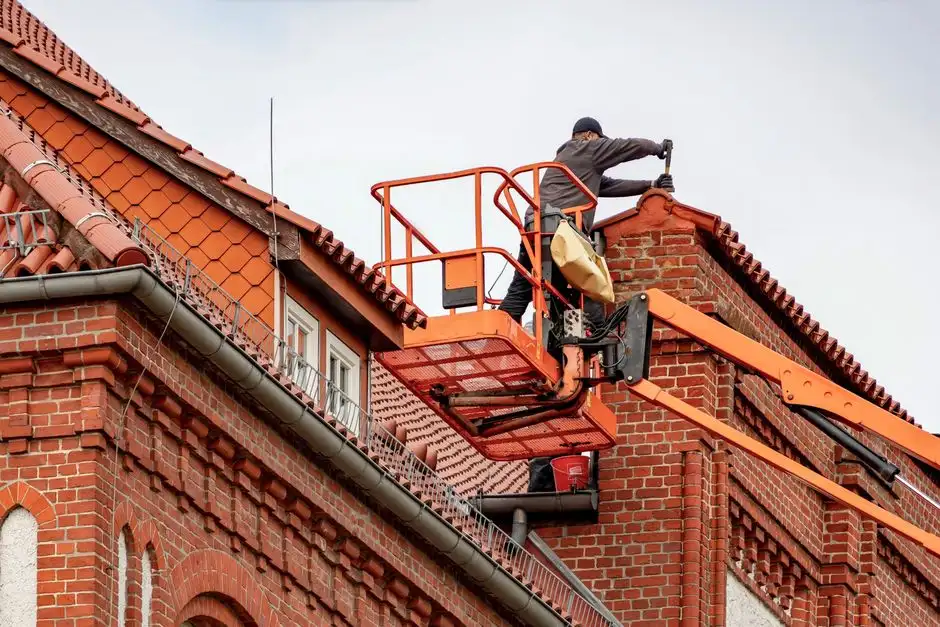
Flat roof leaks in Newark row houses happen because the roof covering has failed at a seam, a flashing point, or a low spot where water sits. The leak almost never starts where the stain shows up on your ceiling - it travels along the roof deck and drips through the first gap it finds. We fix these every week in Newark's older row house blocks, and the causes are remarkably consistent.
This post walks through why flat roofs leak on Newark row houses, the specific failure points we see most, how to trace a leak, and what a real repair looks like. If you want the short version: most leaks come from open seams, failed flashing at parapet walls and chimneys, or ponding water that never drains.
Why Flat Roofs Leak on Newark Row Houses
Newark row houses were built tight against each other, and their flat roofs were never designed to shed water the way a pitched roof does. Water sits until it finds a way in. That is the whole story in one sentence.
Flat roof leaks in Newark row houses are a specific class of problem: the roof is shared, the parapet walls are common, and the drainage often runs toward a neighbor's side or a single scupper. When one unit's roof fails, the water can show up two doors down. We have traced ceiling stains in one unit back to a seam failure three units over.
The building stock matters too. Most of these row houses went up between 1890 and 1930. The original roofs were tar and gravel. Many have been recoated, patched, and layered over so many times that the flashing is buried under four or five inches of old material. That buildup hides the actual leak point and makes a proper repair harder.
If you own or manage one of these buildings, you are not dealing with a generic flat roof. You are dealing with a Newark row house flat roof, and it needs to be treated that way. For a broader look at what we handle across the city, see our Roof Repair Newark NJ services.
The Most Common Causes We Find
After enough of these calls, the causes sort into a handful of categories. Here is what we actually find when we get up on the roof.
Open seams and failed lap joints
On a modified bitumen or EPDM flat roof, the seams are the weak point. Heat and cold cycles in Newark - 95°F in July, 15°F in January - expand and contract the membrane. Over 10 to 15 years, the adhesive at the lap joint gives up. Once a seam opens even a quarter inch, water gets under the membrane and spreads sideways.
Failed flashing at parapet walls and chimneys
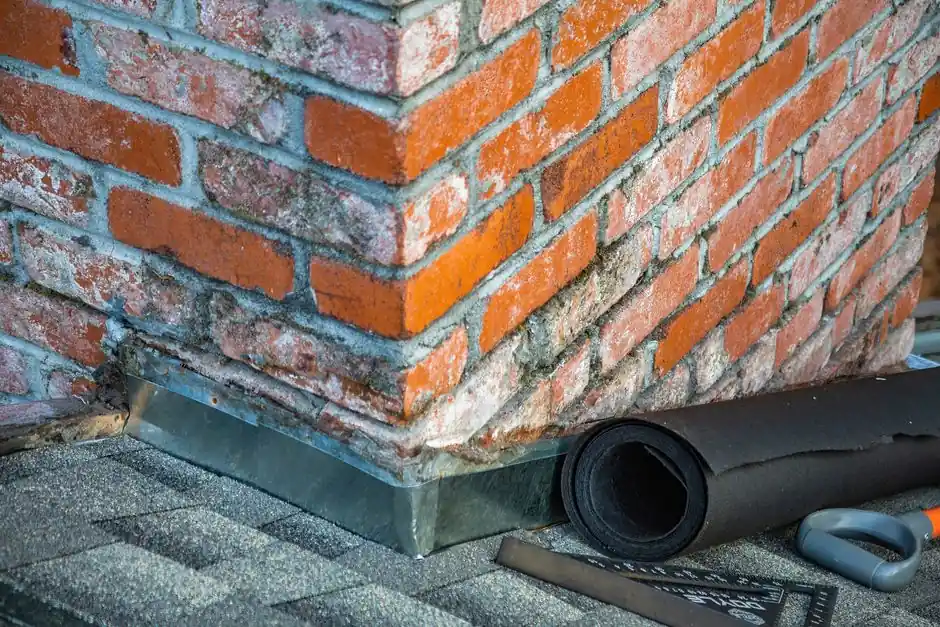
Row houses have parapet walls running the full length of the building. The flashing where the roof meets that wall is the number one leak point we see. The same goes for chimney flashing. If the counterflashing has pulled away or the sealant has dried out, water runs straight down the wall cavity. That is why so many Newark row house roofing problems show up as a ceiling stain near the front or back wall rather than the middle of the room.
Ponding water and clogged drains
Flat roofs are supposed to have a slight slope toward a drain or scupper. After 80 or 90 years, that slope is gone. Add a clogged scupper full of leaves and grit, and you get standing water that sits for days after a rain. Standing water breaks down any roof coating. It also finds every pinhole. If your roof holds water for more than 48 hours after a storm, that is a drainage problem, not just a leak problem.
Blistering and alligatoring on old tar roofs
On the older tar-and-gravel roofs, the surface dries out and cracks into a pattern that looks like alligator skin. Once that happens, the roof is no longer waterproof. You can coat it, but the coating is a bandage. The real fix is a new membrane.
Roof penetrations
Every vent pipe, exhaust fan, and skylight is a hole in the roof. Each one needs a proper boot or curb flashing. When the rubber boot around a vent pipe cracks - and they all crack eventually - water runs down the pipe. This is one of the easiest leaks to fix and one of the most commonly missed.
How to Tell Where the Leak Is Coming From
You can narrow down the source before anyone gets on the roof. Water on a flat roof travels along the deck, so the stain on your ceiling is often 10 to 20 feet from the actual entry point.
Here is what to check from inside:
- Where is the stain? A stain near an exterior wall points to parapet or chimney flashing. A stain in the middle of the ceiling points to a seam or a field membrane failure.
- When does it leak? If it leaks during every rain, the opening is large. If it only leaks during heavy, wind-driven rain, the water is being pushed sideways into a flashing joint.
- Is it worse after snow melts? Ice damming at the parapet is a common Newark winter problem. Water backs up under the flashing and finds a way in.
- Is there a skylight or vent nearby? Nine times out of ten, a leak within 3 feet of a penetration is coming from that penetration.
From the roof, we look for open seams, blisters, soft spots underfoot, and any place where the flashing has pulled away from the wall. A moisture meter confirms how far the water has spread. If the leak has already soaked the insulation, a patch on top will not stop it - the wet insulation has to come out.
How We Fix Flat Roof Leaks on Newark Row Houses
The fix depends on what failed, how old the roof is, and whether the water has reached the deck. We do not sell a full roof replacement when a targeted repair will hold.
For a seam or small membrane failure, we cut back the old material to sound roofing, clean it, and install a new patch with proper lap adhesive. For flashing leaks, we remove the old counterflashing, re-seal the base flashing, and install new metal. For ponding, we clear the drain and, if the slope is gone, we add a tapered insulation layer to push water toward the scupper.
If the roof is past 20 years old and has three or more active leaks, a repair is throwing money at a losing battle. That is when we recommend a full flat roof replacement. For that scope, see our Flat Roof Repair Newark NJ page.
Most targeted repairs take one day. A full flat roof replacement on a typical 20-by-40-foot Newark row house takes two to three days, weather permitting. We schedule around rain and do not leave an open roof overnight.
Typical 2026 pricing in this area: a targeted flat roof leak repair runs $450 to $1,200 depending on access and the size of the failure. A full flat roof replacement on a row house runs $6,500 to $14,000. If the leak has reached the ceiling, you may also need Ceiling Leak From the Roof Repair Newark NJ to handle the interior damage.
What to Watch Out For
Most flat roof leak fixes that fail were done wrong the first time. Here is what we see on re-calls.
- Patching over wet insulation. If the deck or insulation is wet, the patch will not bond. The leak comes back in a month.
- Using roof cement as a permanent fix. Roof cement is a temporary patch. It cracks within a year. It is fine for an emergency, not for a repair.
- Ignoring the parapet wall. If the leak is at the wall, patching the field membrane does nothing. The flashing has to be addressed.
- Not clearing the drain. A repaired roof with a clogged scupper will pond again and fail again.
- Letting a roofer talk you into a full replacement when a repair will do. Get a second opinion if the scope feels bigger than the problem.
One more thing: if your building is a 2 to 4 family home, the roof is likely shared with tenants or neighbors. We handle 2 to 4 Family Home Roof Repair Newark NJ regularly and know how to work around occupied units.
When to Call a Professional
Call us when the leak is active, when the ceiling is stained or sagging, or when you cannot find the source from inside. A flat roof leak that has been running for weeks has already soaked the insulation and possibly the deck. That is not a DIY fix.
We also get called for Roof Leak Repair Newark NJ after storms, when wind has peeled back a membrane or a tree limb has punched a hole. If water is coming in right now, we treat it as an emergency and get someone out the same day.
If you are in the Ironbound, we see a lot of these leaks on the older brick row houses near Ferry Street. You can read about our work there at Roof Repair in Ironbound.
If you are not sure whether you need a repair or a replacement, call us. We will tell you straight. A 10-minute conversation can save you thousands.
Frequently Asked Questions
Why do flat roofs leak on Newark row houses?
Most leaks come from open seams, failed flashing at parapet walls and chimneys, or ponding water that never drains. Newark's freeze-thaw cycles and older building stock make these failure points worse than on newer roofs.
How much does flat roof leak repair cost in Newark NJ?
In 2026, a targeted flat roof leak repair in Newark typically runs $450 to $1,200. A full flat roof replacement on a row house runs $6,500 to $14,000. The price depends on access, the size of the failure, and whether the deck is wet.
Who repairs flat roofs on row houses in Newark?
We do. NJ Roof Repair Connect handles flat roof leak repair on Newark row houses, including shared roofs and parapet flashing. We are local, we know the building stock, and we fix the cause, not just the stain.
Can flat roof leaks on Newark row houses be fixed?
Yes. Most flat roof leaks can be fixed with a targeted repair if the membrane is otherwise sound. If the roof is past 20 years old and has multiple active leaks, a full replacement is the better long-term fix.
How long does flat roof repair take in Newark NJ?
Most targeted flat roof leak repairs take one day. A full flat roof replacement on a typical Newark row house takes two to three days, weather permitting. We do not leave an open roof overnight.
Get Help with Roof Repair in Newark
If you have a flat roof leak in your Newark row house, we can find it and fix it. We know these buildings, we know where they fail, and we fix the cause so the leak does not come back.
Call us at +1 (626) 630-0000 to schedule a repair or get an honest assessment of whether you need one.